130 years ago, in 1896, the Ellicott Square Building opened for business in downtown Buffalo and instantly changed what people thought a single office building could be.
The project itself was driven by some of the most influential names in Buffalo during the late 19th century. Developed by the Ellicott Square Company and designed by the nationally known architectural firm of Daniel Burnham and John Root, the building reflected the ambition that defined Buffalo at the time. Burnham was already becoming famous for designing massive commercial buildings in cities like Chicago, and the Ellicott Square Building carried a lot of the same ideas that were transforming American architecture during the early skyscraper era. The building itself was named after Joseph Ellicott, the Holland Land Company surveyor whose street grid and city planning helped shape early Buffalo decades before the skyscraper ever existed. By the 1890s, naming the largest office building in the world after him was a way of connecting Buffalo’s explosive industrial future to the people who had originally laid the city out on paper nearly a century earlier.
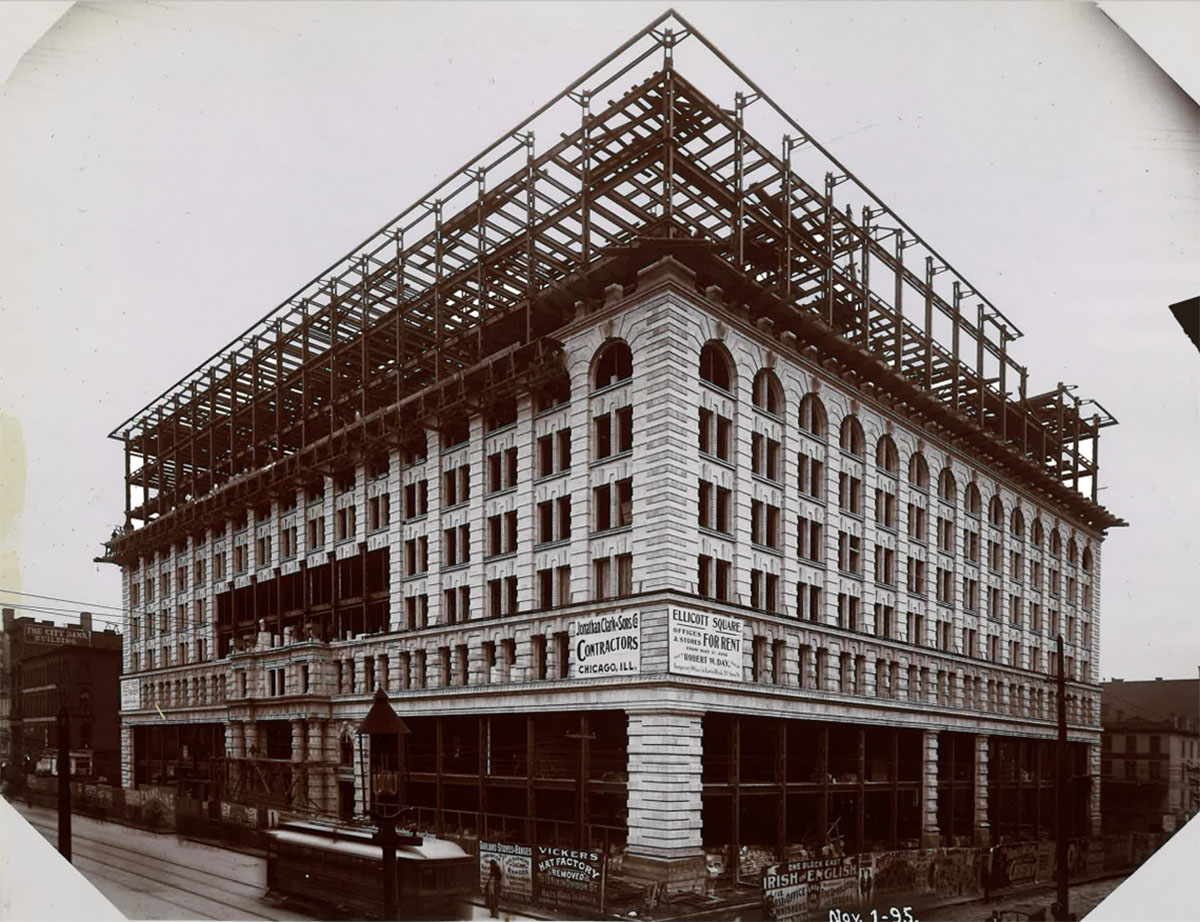
The Ellicott Square Building arrived at a time when Buffalo was experiencing one of its most confident eras. The city was booming from shipping, railroads, grain, and industry, and there was this very real sense that Buffalo was not just part of the national economy but actively shaping it. So, when developers decided to build something massive in the heart of downtown, they did not think small.
From the time it was completed until 1908, it was the largest office building in the world, which is the kind of fact that was an unmatched distinction at the time. For a few years, Buffalo could say it had the biggest office building on earth sitting right in its downtown core, surrounded by streetcars and horse-drawn traffic and the general chaos of a rapidly growing industrial city.
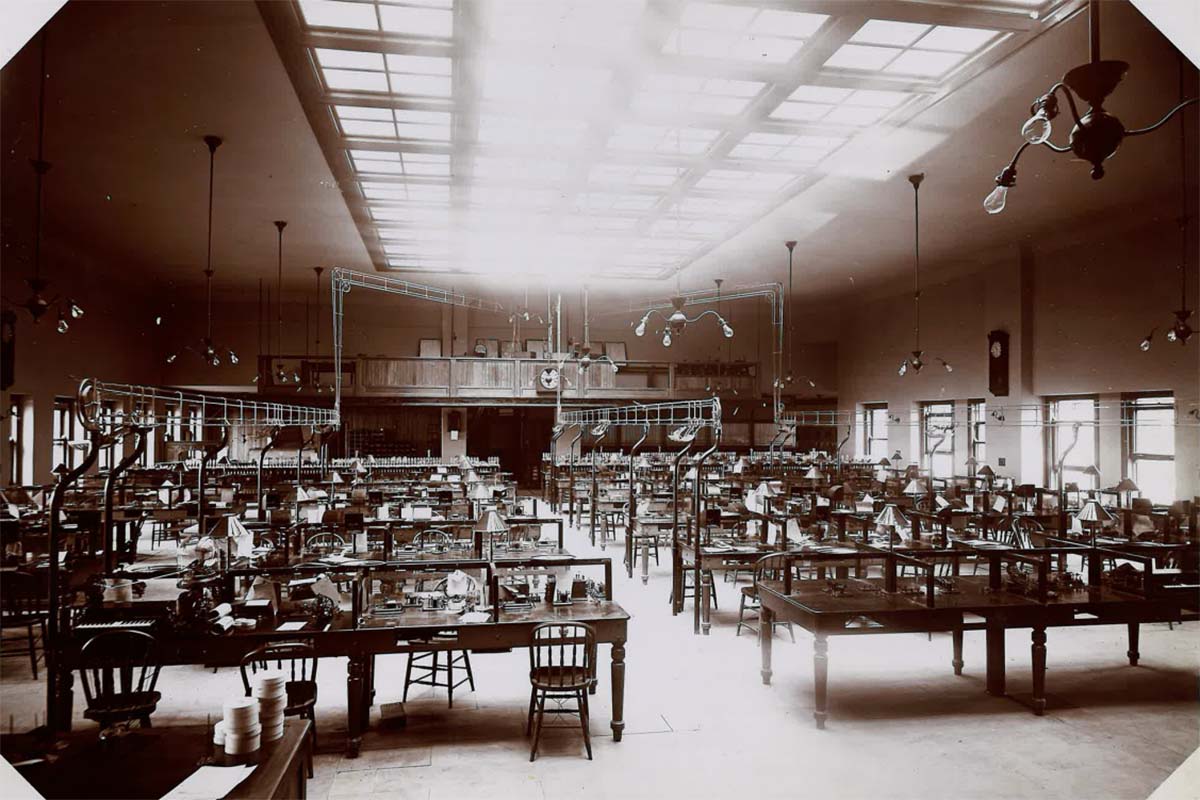
Inside, the building functioned like its own ecosystem. Hundreds of offices filled with lawyers, bankers, insurance agents, railroad reps, doctors, and a wide range of professionals created a constant flow of business. There were even interior shopping spaces, meaning people could essentially live their entire workday without stepping outside. In Buffalo winters, that was the closest thing to luxury anyone could ask for.
One of the more underrated parts of its history is how socially important it became. The upper floors housed exclusive clubs like the Ellicott Club, where Buffalo’s business elite gathered and made decisions that quietly shaped the city’s future over long lunches and longer conversations. It had Gilded Age energy where business, networking, and social status all blended in the same space.
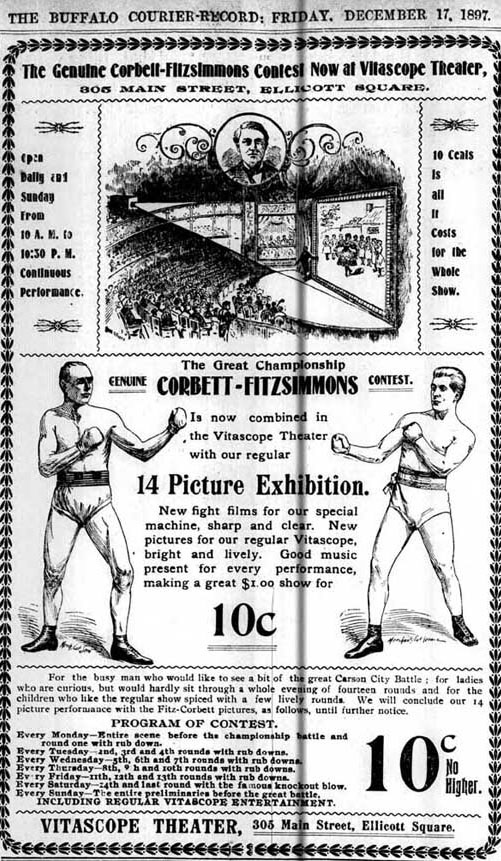
And then there is the impact on film history. The building was home to Vitascope Hall, widely considered the world’s first permanent movie theater. In 1896, when motion pictures were still brand new and magical in a science experiment way, people could go into that space and watch moving images as a dedicated form of entertainment. Before that, films were usually just temporary attractions or traveling shows, so having a permanent theater was a huge shift in how entertainment worked.
(Click to Enlarge)
Even after Buffalo’s Gilded Age peak began to fade, the building kept finding new ways to tie itself into major moments in American history. During World War II, the Ellicott Square Building housed a wartime blood donation center where Buffalo residents donated blood for injured soldiers overseas. In the middle of a downtown area filled with war production, packed streetcars, and factories running around the clock, people walked into the same building that once hosted elite social clubs and early movie audiences to contribute directly to the war effort. It is one of those details that feels easy to overlook today, but it says a lot about how connected the building always was to the life of the city around it.
The Ellicott Square Building also operated like its own miniature city. Beyond the law offices and financial firms, there were restaurants, barber shops, telegraph offices, classrooms, and businesses connected to nearly every major industry in Buffalo at the time. Early advertisements proudly promoted the building’s electric lighting and modern elevators, which in the 1890s genuinely felt futuristic. The upper floors once included rooftop spaces connected to the Ellicott Club, giving members views over a Buffalo skyline that was rapidly filling with smokestacks, church towers, and new high-rise construction. Over the decades, parts of the building changed, especially as some of its original exterior ornamentation and rooftop features were removed during the mid-20th century, but the core of it survived while much of downtown Buffalo was being demolished or rebuilt around it. That is part of what makes the building feel so unusual today. It was never frozen in time. It simply kept adapting.
As decades passed, the city changed and so did the building’s role in it. Buffalo’s industrial dominance faded over time, and like many Rust Belt cities, downtown went through periods of decline and reinvention. But the Ellicott Square Building stayed put through all of it. While other historic structures were torn down or forgotten, it continued operating as a working office building.
Today, it still functions in downtown Buffalo, which is remarkable when you think about everything it has witnessed. It has seen the city at its most powerful, its most uncertain, and everything in between, and still there doing its job like it never planned to leave.